

Introduction
Hello, I’m Colonel Pete, the founder and president of the Tocqueville Liberty Institute. In this blog post, I’ll share the story of why I founded the Institute and the journey that led me to purchase my first 40 Bitcoins for just $500. This wasn’t a spontaneous decision but a gradual process rooted in my quest to understand economic systems and their impact on liberty. Let’s dive into the story.
A Reaction to Economic Injustice
My journey began in 2008, a pivotal year marked by the Great Recession and the Troubled Assets Relief Program (TARP). When President George W. Bush signed the $700 billion TARP bill to bail out failing banks, I felt a visceral reaction. Something about using taxpayer dollars to rescue financial institutions seemed fundamentally wrong, but I couldn’t articulate why. This unease drove me to research and educate myself on economic principles.
Through my exploration, I discovered the Mises Institute (mises.org) and was introduced to Austrian economics. This school of thought, contrasting with the prevailing Keynesian economics used in the U.S., provided clarity on why the bailout felt unjust. It also led me to study the history of the U.S. banking system, uncovering a series of events that shaped my perspective.
A Brief History of U.S. Monetary Policy
The Era Without a Central Bank
In 1832, President Andrew Jackson vetoed the renewal of the Second Bank of the United States’ charter, leaving the U.S. without a central bank from 1832 to 1913. During this period, Americans grew wary of centralized banking power.
The Birth of the Federal Reserve
In 1910, a secretive meeting on Jekyll Island, Georgia, involving influential bankers under pseudonyms, drafted what would become the Federal Reserve Act of 1913. The Federal Reserve, a private institution with undisclosed ownership, was established as the U.S. central bank. It has never been audited, despite efforts like those of Ron Paul to push for transparency.
The Federal Reserve lends money to the U.S. government, requiring collateral. In 1913, the 16th Amendment was passed, granting Congress the power to levy income taxes on American citizens, effectively making the public the collateral for government debt.
The Gold Confiscation of 1933
Fast forward to the Great Depression in 1933. President Franklin D. Roosevelt, needing funds to support recovery programs, faced a liquidity crisis. At the time, the U.S. dollar was backed by gold at $20 per ounce. To acquire more gold, Roosevelt signed Executive Order 6102, making it illegal for Americans to own gold bullion or coins, with penalties including hefty fines or imprisonment. After the confiscation, the dollar was devalued, with gold revalued to $35 per ounce, reducing the dollar’s purchasing power by about 40%.
The Bretton Woods System and the Gold Window
In 1944, the Bretton Woods Agreement established the U.S. dollar as the world’s reserve currency, backed by gold at $35 per ounce. This system allowed foreign central banks to redeem dollars for gold. However, during the Korean War in the 1950s, the U.S. began printing money to finance the conflict, devaluing the dollar and prompting nations like France and Switzerland to demand their gold. In 1971, President Richard Nixon closed the gold window, making the dollar a fiat currency backed only by the “good faith and credit” of the U.S. government.
In 1974, Nixon signed Executive Order 11825, repealing the 1933 gold ownership ban, making it legal for Americans to own gold again.
Discovering Bitcoin
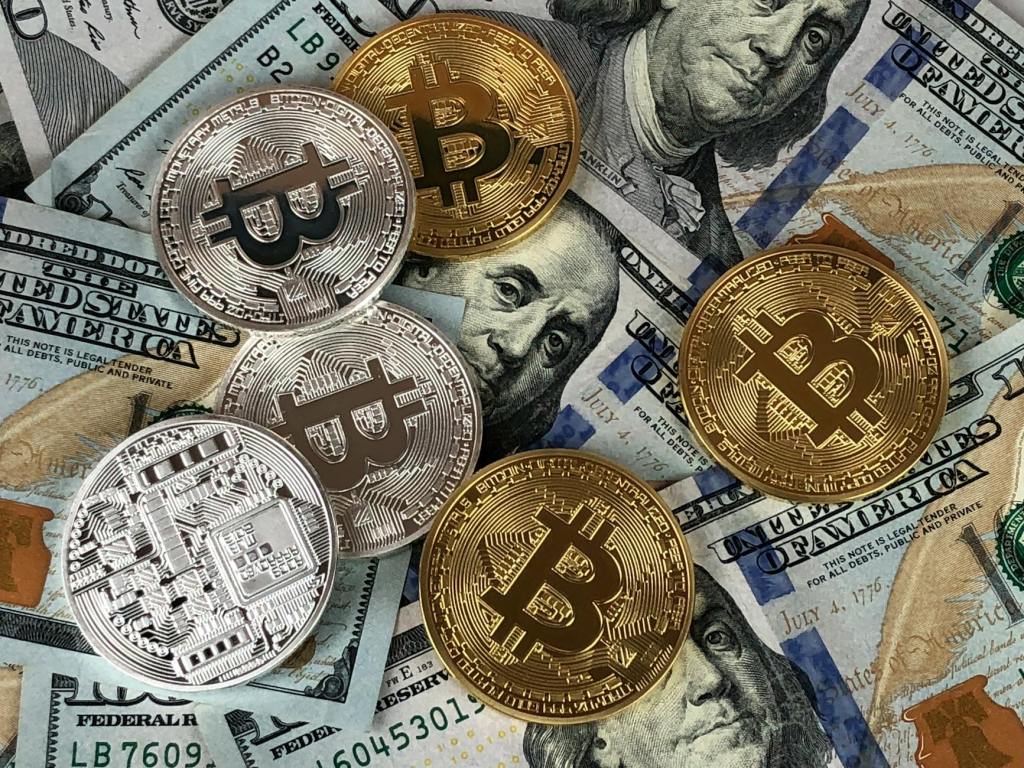
As I studied monetary systems, I came across an article about Bitcoin in 2011. I learned that money, as a medium of exchange, must be rare, fungible, divisible, portable, and durable. Bitcoin met all these criteria, making it a compelling alternative to fiat currency. Intrigued, I decided to invest $500 to purchase 40 Bitcoins through an exchange, a decision driven by my understanding of monetary history and the desire for a decentralized, sound money system.
The Red Pill Moment
This journey felt like taking the red pill from The Matrix—a choice to see the world through a new lens. By “following the money,” I gained a deeper understanding of global events and the role of monetary policy in shaping them. The almighty dollar often drives decisions, even those cloaked in altruistic motives.
Founding the Tocqueville Liberty Institute
My exploration of economics and liberty led me to found the Tocqueville Liberty Institute. Inspired by John Adams’ belief that our Constitution is suited only for a “moral and religious people,” I established the Institute to educate Americans on civic responsibilities and the principles of a free market balanced with compassion for the vulnerable. Our mission is to preserve the Republic for future generations by fostering a deeper understanding of liberty and self-governance.
Looking Ahead
This story is just the beginning. In future discussions, I’ll delve deeper into these topics, exploring how economic policies and individual actions shape our world. Thank you for joining me on this journey. Stay tuned for more insights, and let’s work together to ensure our Republic endures for our children and beyond.
 The Tocqueville Liberty Institute
Leave a comment