
Taipei · Xinyi Road, Section 3, Lane 31, No. 16
The House on Xinyi Road
Thirty eight years of martial law. One family paid for a piece of the last stretch, in a basement, at noon, on the anniversary of the massacre the island was forbidden to name.
Published as civic education: the record of a country that lived thirty eight years without the republic's guardrails, and of the people who built them.
One · Two Februaries
A widow, a tray of cigarettes, a gun barrel
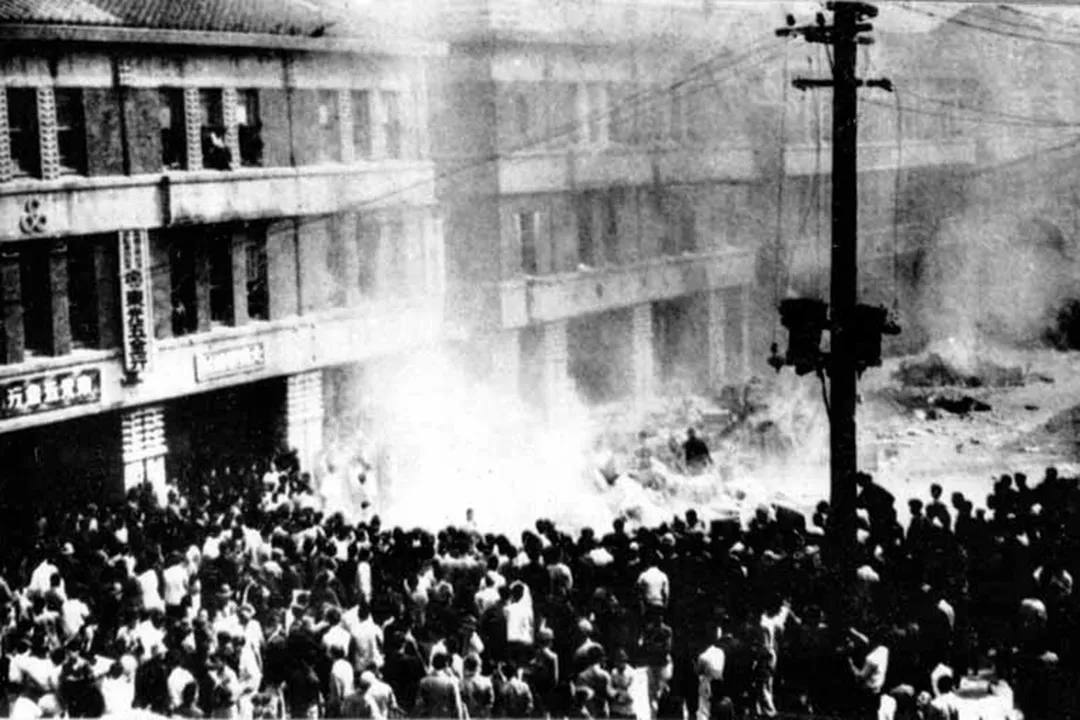
On 27 February 1947 a widow named Lin Chiang-mai 林江邁 was selling untaxed cigarettes outside the Tianma Tea House 天馬茶房 in Taipei.
Monopoly Bureau agents took her cash and her goods. She grabbed at one of them. An investigator named Yeh Te-ken 葉得根 opened her scalp with his gun. As the agents ran from the crowd, one fired and hit a bystander, who died the next day.
The next day the crowd marched. Guards at the Executive Office fired into it. By 8 March the 21st Division had landed from the mainland, and the village-clearing sweeps 清鄉 ran until mid-May. The government's own 1992 commission put the dead at eighteen to twenty eight thousand. That number is still fought over in both directions.
What is not fought over is who died. Judges, doctors, professors, newspapermen, provincial assemblymen. The painter Chen Cheng-po 陳澄波 was shot in front of Chiayi railway station on 25 March and left lying there for three days. The Japanese-educated Taiwanese who knew how to run an island were removed from it.
Thirty three years later, to the day, a man let himself into a house on Xinyi Road.
Two · The apparatus
What was actually standing over them
Chen Cheng 陳誠 declared martial law over Taiwan and Penghu on 19 May 1949. Chiang Ching-kuo 蔣經國 signed it away on 14 July 1987, effective the next day. Thirty eight years and fifty six days.
Under it sat the Temporary Provisions Effective During the Period of National Mobilization for Suppression of the Communist Rebellion 動員戡亂時期臨時條款, adopted in May 1948. They granted emergency powers with no end date, and were amended in 1960 to lift the two-term limit off the president so Chiang Kai-shek 蔣介石 could stand again. Civilians went before military tribunals. New parties were illegal. New newspaper licences were frozen, and the papers that existed were capped at six pages, raised over the decades to twelve.
A parliament elected on the mainland in 1947 and 1948 sat for forty three years. Supplementary seats were opened to island voters from 1969, but the mainland members themselves never faced an electorate again. People called it the ten thousand year parliament 萬年國會. Nobody meant it kindly.
Three · Yilan
A lawyer from Wujie
Lin Yi-hsiung 林義雄 was born on 24 August 1941 in Wujie Township 五結鄉, Yilan County 宜蘭縣, when the island was still Japanese. His father died when he was ten. He took his law degree at National Taiwan University in 1964 and passed the bar in 1966, placing first in the country.
He defended Kuo Yu-hsin 郭雨新 after the KMT 國民黨 took Yilan's legislative seat from him by fraud, and co-wrote the books documenting how it was done. In 1973 he helped found a legal services centre for ordinary people in Taipei. In 1977 Yilan sent him to the Provincial Assembly with more than seventy three thousand votes, the highest count in the county.
Four · Kaohsiung, 10 December 1979
The trial they made the mistake of holding in public
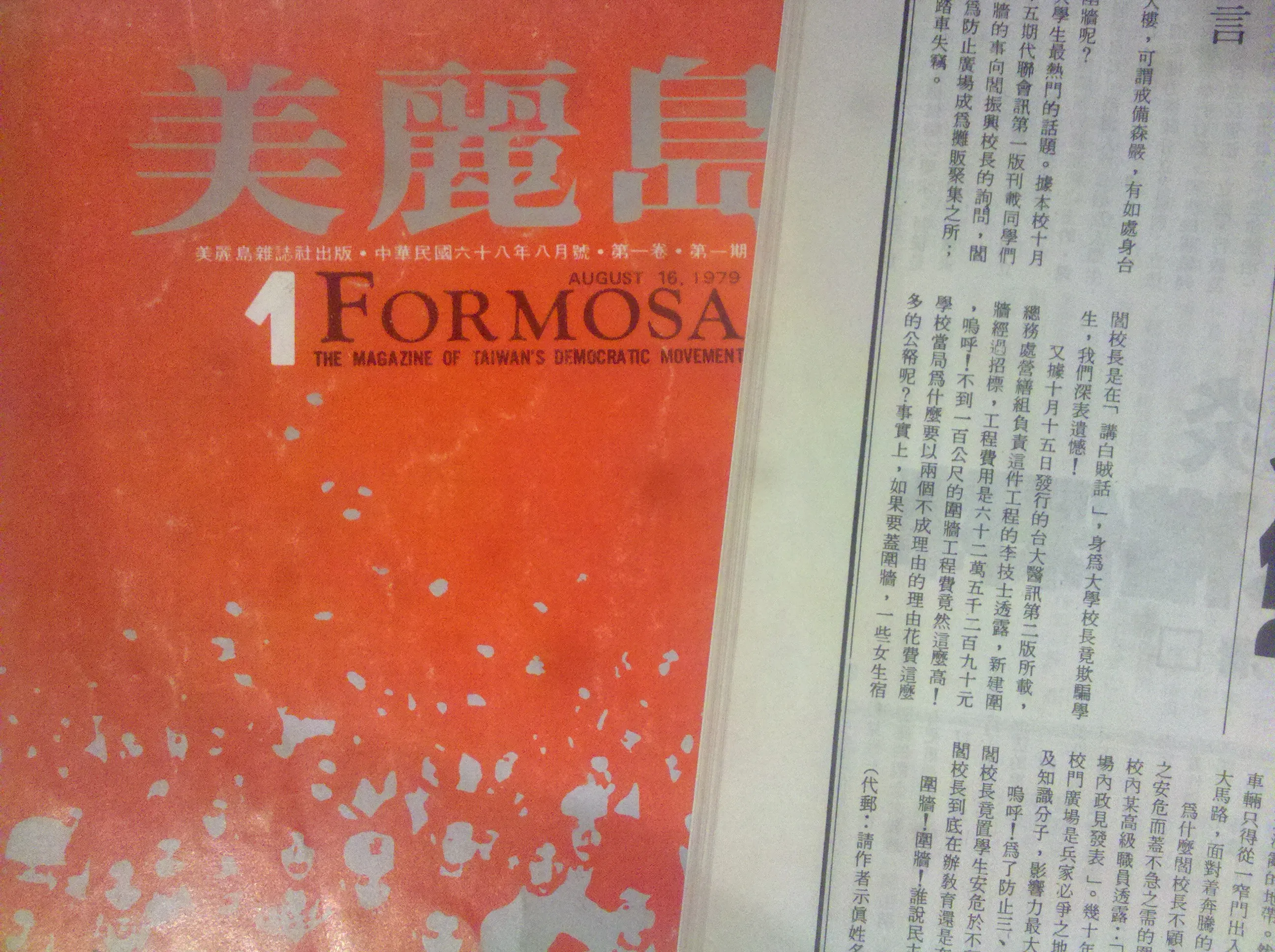
Formosa 美麗島 launched on 16 August 1979 and sold out its first issue. By autumn it was moving upwards of a hundred thousand copies an issue, and its service offices around the island were functioning as a political party that could not legally exist.
On Human Rights Day, 10 December 1979, Formosa held an unauthorised rally in Kaohsiung 高雄. Police occupied the venue, so the crowd moved to a traffic circle. Tear gas went in around eight in the evening. The Garrison Command 警備總司令部 afterwards reported 183 police injured and one civilian. Nobody believed it.
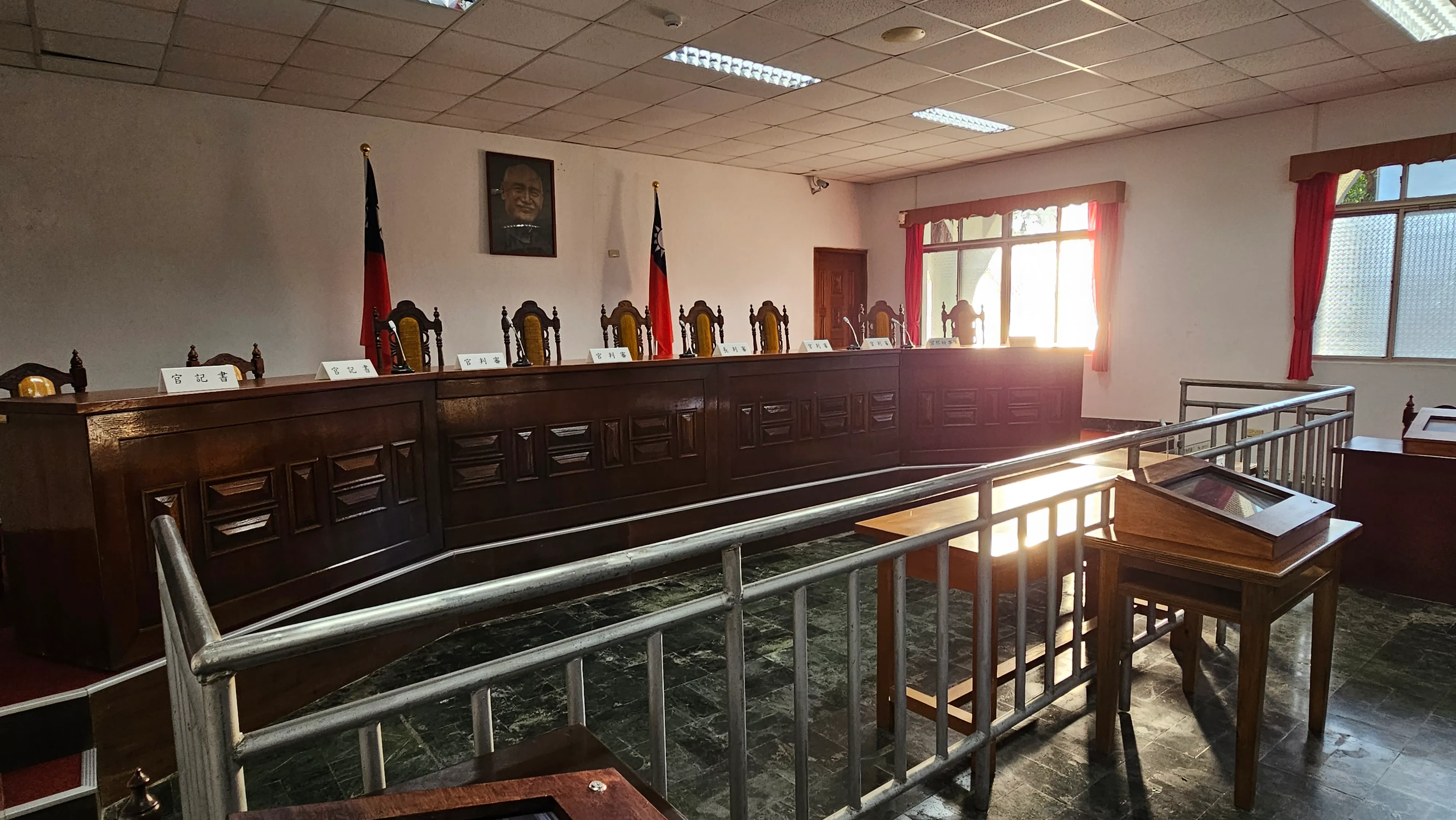
Arrests began on the 13th. Lin was taken that day, interrogated for forty two days, and tortured. The military court excluded the tape recordings that supported him and admitted the confession that did not. Eight defendants: life for Shih Ming-teh 施明德, fourteen years for Huang Hsin-chieh 黃信介, twelve years each for the other six. Lin was one of the six.
The tribunal sat in open court and the newspapers printed the defendants' arguments across the island. That was the regime's mistake. On the defence bench that spring sat Chen Shui-bian 陳水扁, Frank Hsieh 謝長廷, Su Tseng-chang 蘇貞昌, Chang Chun-hsiung 張俊雄 and Chiang Peng-chien 江鵬堅. Within a generation one of them was president, three had served as premier, and one had founded the party that carried him there. Annette Lu 呂秀蓮, sentenced to twelve years for sedition, became his vice president.
Five · The warning
Twenty four hours
His interrogators had a line ready for him.
Don't tell your family about the “treatment” you received, or else “unfavorable” things could happen to your relatives.
Taiwan Garrison Command interrogators, as recorded by Taiwan Communiqué
On 27 February 1980 his wife Fang Su-min 方素敏 and his mother Yu A-mei 游阿妹 were allowed to see him for the first time. He had been beaten badly enough that his mother kept asking about it.
Have you been tortured?
Don't ask me such questions. You know what kind of things happen here.
Yu A-mei and her son, Jingmei detention centre 景美看守所, 27 February 1980
She had a day left.
Six · The record of the day
28 February 1980
Times below are taken from the High Prosecutors Office reinvestigation report of 2009 and the Control Yuan's closing report of 2023. The house had been under round-the-clock surveillance and a Garrison Command 警總 wiretap since his arrest, eleven weeks earlier.
| 02:00 | Fang Su-min gets home by taxi from the Jingmei military law court compound, where the Kaohsiung proceedings are running. |
| ~10:00 | She leaves again for the court. She is away from the house for the rest of the day. |
| 11:30 | Fang telephones home. Lin Ting-chun answers. Nothing is wrong. |
| 11:55 | Bruce Jacobs 家博, an Australian academic and family friend, telephones from International House and talks to the twins for several minutes. They are alive and unhurt. |
| ~12:00 | Lin Huan-chun comes home from school and rings the bell. Someone is already inside. |
| 12:10 | Fang telephones home three times. Nobody picks up. She hands her house key to Tien Chiu-chin. |
| 13:07 | A neighbour, Chen Yung-chung 陳永忠, sees a man of about thirty walking away from the house. |
| 13:10 | Someone inside the house dials 104, the directory service, and asks for the number of the Gold Piano restaurant 金琴西餐廳 on Nanjing East Road. |
| 13:12 | He calls it and asks for a Mr Wang Chun-feng 王春風(發). Eight seconds. No such man was ever found, and the prosecutors wrote the third syllable of the name in phonetic script because they could not establish which character it was.Wiretap logged both calls · no transcript written for either · tapes gone |
| 13:40 | Tien Chiu-chin 田秋堇, Lin's twenty six year old assistant, arrives by bus. She finds Lin Huan-chun in the main bedroom, badly wounded and conscious. Auntie Tien, don't shake me, it hurts so much. |
| 14:16 | The Da'an precinct 大安分局 logs the report. Tien made the call on the tapped telephone. The officer asked her which Lin Yi-hsiung she meant. |
| after | Yu A-mei, sixty, is found dead on the basement stairs. The twins are found in the basement below her. Lin Liang-chun 林亮均 and Lin Ting-chun 林亭均, six years old, born on the second of February. |
She had called from the telephone the state was listening to.
你也太假了吧,你們監控林家這麼久,現在問我哪一個林義雄?
That is far too fake. You have been watching the Lin house all this time, and now you ask me which Lin Yi-hsiung.
Tien Chiu-chin, recalling the call · Mirror Media, 2026
She rode with the girl to Renai Hospital.
Seven · The tape
Project Rainbow
The tap on the Lin house was not a special measure. It ran under 彩虹專案, Project Rainbow, the Garrison Command's standing wiretap programme against opposition figures, which had been listening to the tangwai for years. Lin himself had been watched since 1977, the year Yilan elected him, by informants, bugs and telephone interception. The house was one line among many.
The National Security Bureau 國家安全局 account of the erased recording is that it did not know a crime had occurred, so the reel was overwritten in the ordinary course of business.
Tien Chiu-chin called the police from the tapped telephone.
Bruce Jacobs, the Australian academic who had telephoned the house at 11:55 and heard the twins alive, was named a suspect for it. He was held three months under round-the-clock “protection” and sleep-deprived questioning, barred from leaving, never charged, and blacklisted from Taiwan until 1992. On 16 November 2018 the foreign minister presented him with the Order of Brilliant Star with Grand Cordon 大綬景星勳章. He died a year later.
Yu Shyi-kun 游錫堃, later premier, was interviewed more than twenty times because a newspaper had described a tall, thin youth. His employment records cleared him.
Although there is no direct evidence proving that intelligence personnel were involved, the massacre took place while the Lin residence was under the Garrison Command's inescapable and tight surveillance. By ordinary reasoning, how could it have been accomplished unless the intelligence units carried it out or tacitly allowed it to happen?
Control Yuan 監察院 closing report, approved 21 February 2023
That report found six failings by the security apparatus: interference in the judicial investigation, misdirection of it, obstruction of evidence collection, media manipulation, harbouring of suspects, and use of organised crime. It named a standing committee through which the Garrison Command steered the criminal inquiry. It found no direct evidence of who held the knife.
Eight · The survivor
The schoolbag
Lin Huan-chun 林奐均 took six wounds. One to the chest, through the lung. Five to the back. The first thrust caught the bag on her shoulders.
當我進到房間,還來不及放下書包,突然間我不自覺地側了一下身子……如果當時我沒有側身,這第一刀一定使我當場斃命。
When I came into the room, before I could even put down my schoolbag, I suddenly turned my body to one side without knowing why. If I had not turned, that first thrust would certainly have killed me on the spot.
Lin Huan-chun, from her 2004 memoir 你是我最愛
She went into a coma at Renai Hospital 仁愛醫院. For four months nobody told her that her grandmother and her sisters were dead.
She left for San Diego with her mother in 1981. She came to faith at eighteen. Indiana for a music degree, Columbia for a master's, and in 2004 a Golden Melody Award for a gospel record made for her family and her faith.
On Feb. 28, 1980, a murderer broke into my home. I was stabbed several times and left to die. My grandmother died while calling out my name.
God has healed me and enabled me to forgive the murderer.
Judy Linton (Lin Huan-chun), Taipei Times, 26 September 2003
She married an American Presbyterian named Joel Linton and moved back. They plant churches in Yilan County. Her father was born there.
Their daughter Ashlyn co-hosts a podcast. One episode is about her grandparents.
Nine · The widow's campaign
A hundred and twenty one thousand votes
Fang Su-min spent that whole day at the military court. Four people were in the house when she left it. One of them was alive when the day ended.
She took the daughter to California in 1981. In October 1983 she came back alone and stood for the Legislative Yuan. The press called it the holy war of the mother. She took roughly a hundred and twenty one thousand votes, the third-highest total in the country, and used the seat to argue for the release of other women's husbands.
Her own was released on 15 August 1984, in the middle of her term, after four years and eight months in custody. Kao Chun-ming 高俊明 walked out the same day. He was general secretary of the Presbyterian Church in Taiwan 台灣基督長老教會, and had hidden Shih Ming-teh from the manhunt, and who in 1977 had signed a declaration urging the government to let Taiwan become a new and independent country. He had written his will before it went out.
Lin refused to hold a funeral for his mother and his daughters while nobody had been caught. He held it on 1 January 1985, nearly five years late. Sixty vehicles followed the hearse to Yilan.
In 1991 he and Fang gave away most of what they owned and founded an education foundation in the county they came from, the Chilin 慈林教育基金會.
Ten · The frame
Forty years, closing and opening
The family story sits inside a national one. The rail beside each entry marks which side of 15 July 1987 it falls on: the years the state could do this and answer to nobody, and the years after it lost that.
The 228 Incident 二二八事件
A confiscated tray of cigarettes, a pistol-whipped widow, a crowd fired on. Troops land from the mainland on 8 March; the sweeps run to mid-May. The 1992 government commission estimates eighteen to twenty eight thousand dead.
Martial law
Chen Cheng declares it over Taiwan and Penghu, effective at midnight on the 20th. It holds for thirty eight years and fifty six days.
Lei Chen 雷震 arrested
Free China 自由中國 had attacked Chiang Kai-shek's third term, and its founder was assembling an opposition party. Ten years. Chiang fixed the sentence before the trial.
The Presbyterian declaration 人權宣言
“…we urge our government to face reality and to take effective measures whereby Taiwan may become a new and independent country.” The first open call for it from a major institution inside the country. Kao Chun-ming and a dozen other church leaders wrote their wills the night before it went out.
Chungli 中壢事件
Ballots destroyed in front of witnesses in Taoyuan. Police protected the returning officer instead of investigating. A crowd besieged the station and burned it, and police shot two young men dead. First mass street protest on the island since 228. Hsu Hsin-liang 許信良 won the county by nearly ninety thousand votes.
Kaohsiung 美麗島事件
Formosa magazine's Human Rights Day rally. Tear gas, then mass arrests, then a military tribunal that the regime unwisely held in the open.
Xinyi Road 林宅血案
Yu A-mei and the Lin twins killed. Lin Huan-chun survives six stab wounds. Nobody has ever been charged.
Chen Wen-chen 陳文成
A Carnegie Mellon statistician home for the summer, taken from his house on 2 July and held by the Garrison Command some twelve or thirteen hours. Found at dawn the next day beside a fire escape at National Taiwan University. Thirteen broken ribs. Cyril Wecht, the American pathologist his family brought in, ruled it homicide.
Henry Liu 江南 / 劉宜良
A Taiwanese-American journalist shot in his garage in Daly City, California, by two Bamboo Union 竹聯幫 gunmen sent by their leader, who had taken the commission from the Defence Ministry's intelligence director. The scandal cost Chiang Ching-kuo his succession plan and a great deal of Washington.
The DPP forms illegally 民主進步黨
One hundred and thirty two people at the Grand Hotel 圓山大飯店 turn a candidate-nomination meeting into a political party. Party elders press for mass arrests. Chiang Ching-kuo, seventy six and in a wheelchair, rules against it. The times are changing, he said around then, and the KMT cannot afford to be too proud.
Martial law ends
Chiang signs the order on the 14th; it takes effect at midnight. Twenty three political prisoners are released that day. The National Security Act that replaces it keeps a good deal of the old machinery.
Wild Lily 野百合學運
Nine students sit down in front of the Chiang Kai-shek Memorial 中正紀念堂. Six days later there are thousands. Lee Teng-hui 李登輝 receives fifty three student and faculty representatives, commits to a National Affairs Conference 國是會議, and defers their other three demands to it.
The ten thousand year parliament retires 萬年國會
Members elected on the mainland in 1947 and 1948 finally stand down after forty three years, forced out by Interpretation No. 261 釋字第261號. The Temporary Provisions had been abolished on 1 May.
The first direct presidential election
Beijing fired missiles into the water off Keelung and Kaohsiung that month and ran live-fire exercises near Penghu. Washington sent two carrier groups. Turnout was 76 percent.
Power changes hands
Chen Shui-bian, who defended the Kaohsiung Eight, wins with 39.3 percent. Annette Lu, who was one of them, becomes vice president. Lin Yi-hsiung, party chairman through the campaign, steps down on 20 April and reaches for Robert Frost to explain why he will not stand again.
The Control Yuan closes its file
Six findings of interference by the security services in the investigation of the murders. Over four thousand documents recommended for declassification. Still no name for the man with the knife.
Eleven · Unfinished
Forty six years, one fingerprint
The case has been reopened four times: 1996, 1998, 2007, and 2009. The 2009 review, ordered by President Ma Ying-jeou, surfaced the record of the 13:12 call and the fact that the tape was gone. It closed after four months for want of forensic evidence. Critics read it as an exercise in clearing the security services rather than finding the killer.
The old twenty five year limitation period expired long ago. In May 2019 the legislature abolished the limitation entirely for offences carrying death or life imprisonment. Prosecutors confirmed in February 2026 that the file cannot be closed by the calendar. It sits with the High Prosecutors' Office and the Criminal Investigation Bureau's cold case unit.
Nationally the accounting has gone further. The Transitional Justice Commission 促轉會 ran from 31 May 2018 to 30 May 2022, put the White Terror database online, and overturned the convictions of 5,983 people. Compensation frameworks have paid out for both 228 and the White Terror. A commission survey in October 2020 counted 1,542 authoritarian symbols standing in public space, from statues to street names. Fewer than a quarter had been dealt with.
In February 2026 a production company announced it had finished shooting a feature film about the murders, Murder of the Century 世紀血案. It had not contacted the family. The wrap press conference was held on 1 February. The coverage ran the next morning, on what would have been the twins' fifty second birthday. The director, Hsu Kun-hua 徐琨華, is the grandson of Hsu Mei-lin 徐梅鄰, the Garrison Command's spokesman in 1980. Material reported by New Bloom and Business Today as having leaked from the script placed the killings at the door of the independence movement. Nobody outside the production has seen the pages.
The cast turned on it. Six actors signed a joint legal statement saying their contracts had carried a written warranty that the rights were cleared, and demanded that their performances never be used in any form. Nana Lee 李千娜 gave her entire fee to the family's foundation. The culture minister, Li Yuan 李遠, said the film tramples on Taiwan's history and its people. Production stopped.
Lee then filed a fraud complaint. On 6 May 2026 the Taipei District Prosecutors Office summoned the producer, Kuo Mu-sheng 郭木盛, and the company's owner, Sam Su 蘇敬軾, as defendants. On 14 August prosecutors declined to charge them, holding that no explicit guarantee of the family's consent could be proved, and that consent is in any case not the only reason an actor takes a part. Asked whether the film will ever be released, Kuo said he could not answer that yet. Su had earlier proposed that they finish the edit and then go and see Lin Yi-hsiung about it.
自古以來,像二二八事件、林家血案這種慘事並不稀罕。世界各國,只要有專制政權存在,這種事就會發生。
Tragedies like the 228 Incident and the Lin family massacre have never been rare. In any country in the world, so long as an authoritarian regime exists, this kind of thing will happen.
Lin Yi-hsiung
Twelve · The basement
義光
The house could not be rented and could not be sold. In 1982 Presbyterian pastors and church members raised the money, bought it from Fang Su-min, and made it a church. Gikong 義光教會. They hold a memorial service in it every 28 February.
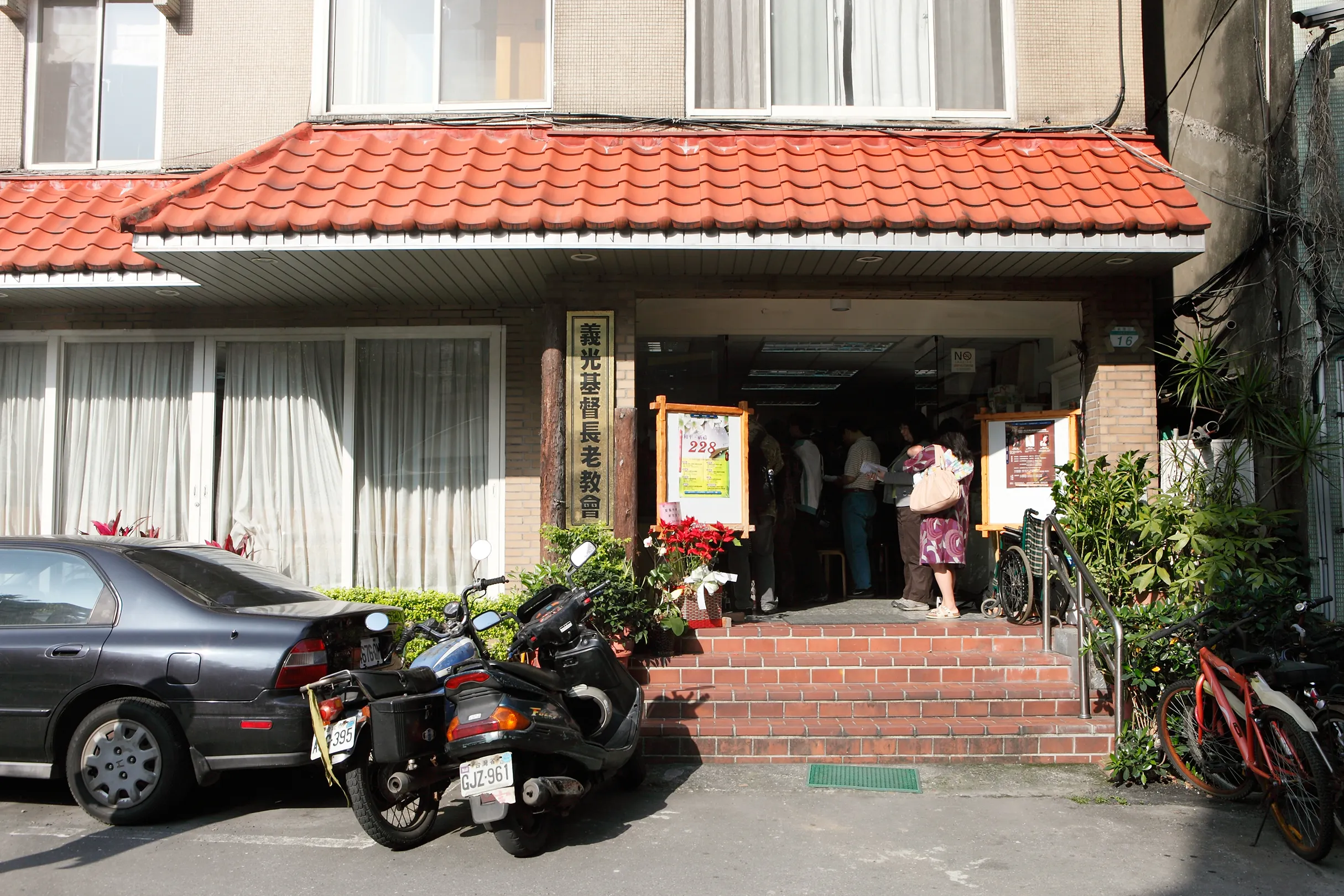
The basement where the three of them died is the children's Sunday school room.
The pastor takes visitors down there. In the seam where the staircase meets the wall there are still stains.
那些痕跡,也是怎樣都清不掉的。
Those traces, too, simply cannot be cleaned away.
Wang Ming-tse 王銘澤, pastor of Gikong Presbyterian Church
In April 2014 Lin Yi-hsiung walked back into that building, sat down, and stopped eating until the government halted construction of the fourth nuclear plant. It took nine days. He was seventy two.
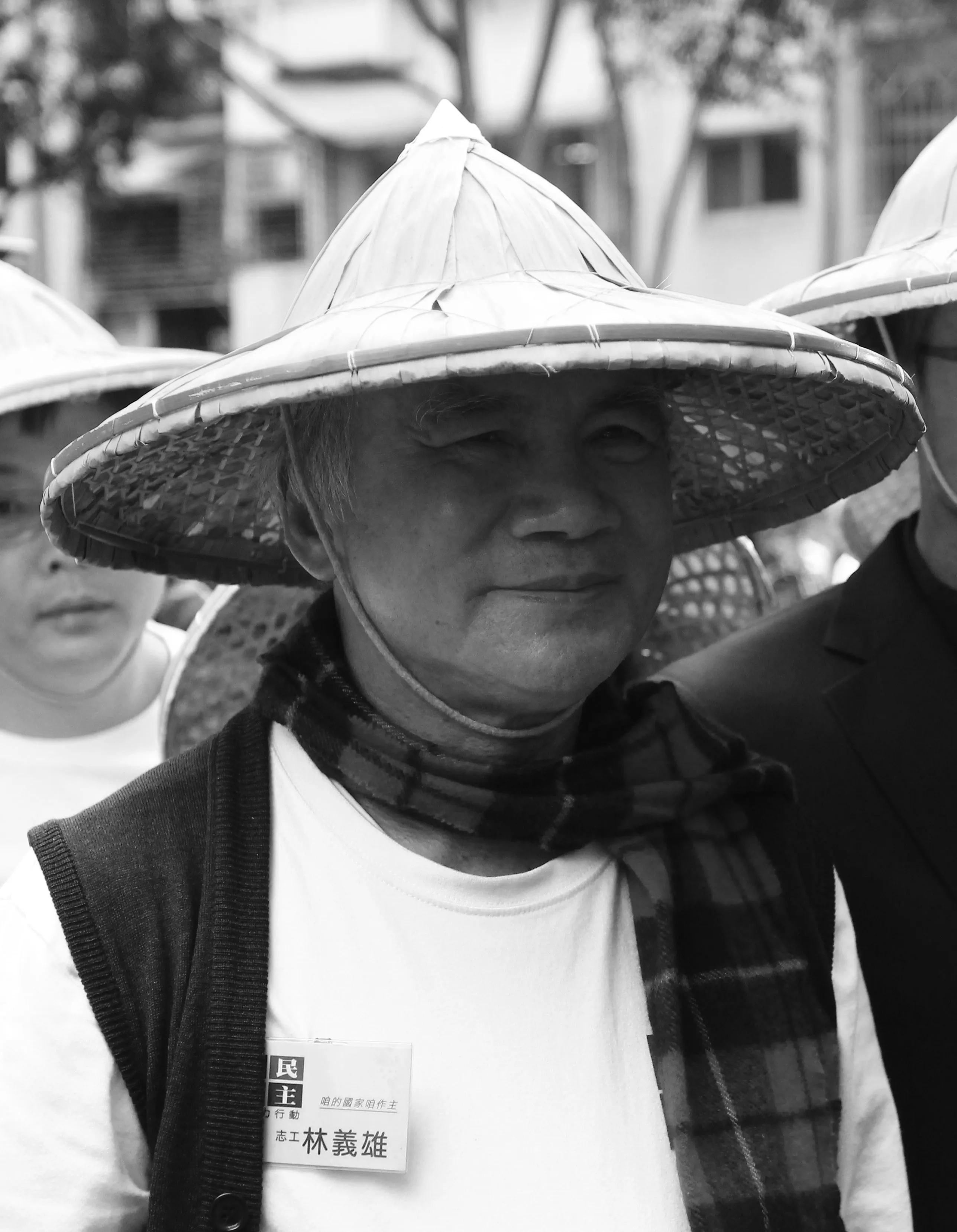
In August 2025 the Ministry of Culture designated the church a site of transitional justice significance 具轉型正義意涵場址. The congregation had applied for the designation themselves. Nobody had ever done that before.
Taiwan votes now. The parliament turns over. The presidency has changed hands in both directions, more than once.
The file on the house is still open. The fingerprint is still unmatched.
A country that can argue about its own worst day in public, with the records declassified and the survivors alive to correct them, has arrived somewhere. Not at a clean ending. At an argument it is allowed to have.
Sources
The recordings this was built around
Five audio links started this page. Two of them carry the history. Three are about church work in Yilan and are listed for what they are.
Primary testimony
Out of Our Minds: Joel & Judy Linton, Christianity in Taiwan
Judy Linton recounts what her family suffered under Chiang Kai-shek's operatives and her own stabbing, and how she came to faith afterward. Hosted by Tim Bayly for Warhorn Media. This is the one episode of the five that carries the political history first-hand.
Third generation
Real Ramen Hour: Gomtang Ramen, Remembering Across Generations
Ashlyn Linton and Lily on their grandparents and political upheaval in Taiwan and Korea. Ashlyn is Judy's daughter, which makes this the grandchild's account of the same events.
Context, not history
Out of Our Minds: Church Planting in Taiwan
Discipleship, language and Scripture, and one family's conversion inside the Yilan church plant. No political history in it.
Context, not history
Household Church Planting in Taiwan, part 2
Organic church planting, long Sundays, Bonhoeffer's Life Together. Useful for who these people are now, not for what happened to them.
Context, not history
Real Ramen Hour: A-Sha Ramen, Life as Missionary Kids
Ashlyn Linton and Jihye Kim on growing up in missionary families. Faith and upbringing, no political material.
Where the documented record came from
- Taiwan High Prosecutors Office, reinvestigation report on the Lin family massacre, 2009. The primary source for the timeline above.
- Control Yuan, closing investigation report, approved 21 February 2023, and ETtoday's reproduction of its hour-by-hour reconstruction.
- Tien Chiu-chin's first-hand testimony, and The Reporter's interview with her.
- New Bloom Magazine, on the case and the limits of transitional justice, February 2020.
- Taipei Times, White Terror survivor finds peace in music and religion, November 2003, and Murder survivor releases album, September 2003.
- Taipei Times on the case's status at forty six years, February 2026, and Focus Taiwan on the film controversy.
- Taiwan News on the Transitional Justice Commission's 2020 findings and the erased recording.
- Taiwan Communiqué, contemporaneous reporting on Lin's detention and torture, 1980s.
- National Human Rights Museum and the Memorial Foundation of 228 for the official record and the victim lists.
- Transitional Justice Database for the count of decisions made personally by Chiang Kai-shek, and the Central News Agency for the 2020 survey of authoritarian symbols.
- The Reporter on Chungli, and Academia Historica for Chiang Kai-shek's written instruction fixing Lei Chen's sentence before trial.
- The Washington Post on the death of Chen Wen-chen, July 1981.
- Presbyterian Church in Taiwan, A Declaration on Human Rights, 16 August 1977.
- Lin Yi-hsiung and Fang Su-min on Wikipedia, for dates and cross-references.
How this was checked. This page has been through two independent verification passes and a reader's challenge, and was corrected each time. The first pass changed the martial law duration from fifty seven days to fifty six, replaced the count of cases Chiang Kai-shek decided personally, corrected the Chungli margin, removed an unreliable circulation figure, and rewrote what Lee Teng-hui actually conceded to the Wild Lily students. The second rebuilt the timeline of 28 February 1980 directly from the 2009 prosecutors' report and the Control Yuan's reconstruction, which moved several times by up to twenty minutes, restored the two calls at 13:10 and 13:12, and gave the name asked for at the restaurant in the form the prosecutors actually recorded it. It also moved Bruce Jacobs' decoration from 2019 to 16 November 2018, corrected the film's press conference to 1 February, and narrowed Project Rainbow from a codename for this one wiretap to the programme it actually was.
Where the record is thin. The neighbour's sighting at 13:07 sits three minutes before two calls placed from inside the house, and the reports do not reconcile them. The grandmother's age is given as sixty in the contemporaneous record and as sixty nine in a few recent news stories; this page follows the older record. The times for the discovery of the three bodies vary between accounts and are left unstated here rather than guessed.
A note on the numbers. The 228 death toll of eighteen to twenty eight thousand is the 1992 Executive Yuan commission's estimate. The 228 Memorial Foundation's own site cites a lower range of ten to twenty thousand, and recent scholarship argues the 1992 figure runs high. The 29,407 military court cases are a Ministry of Justice tally from the late 1980s, and not all of them were political. The twins are recorded as six by Western reckoning and seven by Taiwanese; Lin Huan-chun was eight and nine on the same two counts. Her grandmother's wounds are published as thirteen in most accounts and fourteen in the itemised autopsy.
On the audio. The two podcast episodes that carry this history were assessed from their published descriptions. Nothing on this page is sourced to the recordings themselves. The Linton family's account, as they tell it, is in the episode linked at the top of the list.
The images. The five photographs were added on 2 September 2026, from Wikimedia Commons; each carries its credit and licence in its caption. The 1947 photograph is in the public domain in Taiwan and the United States. No photograph of the 1979 rally or the 1980 court-martial circulates under a free licence, which is why the preserved courtroom at Jingmei stands in for the trial.
Compiled and verified 28 August 2026.